

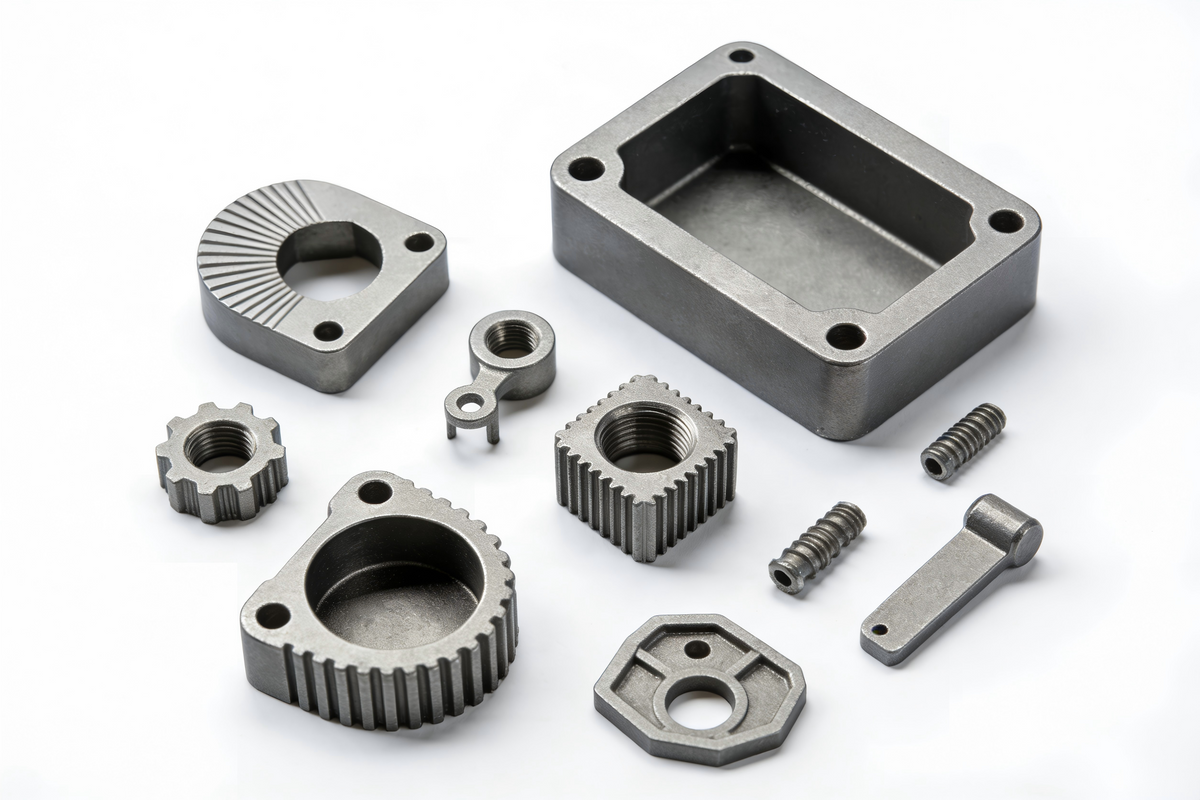
Manufacturing small metal components with complex geometries can become expensive when conventional CNC machining requires multiple setups, specialized cutting tools, and extensive material removal.
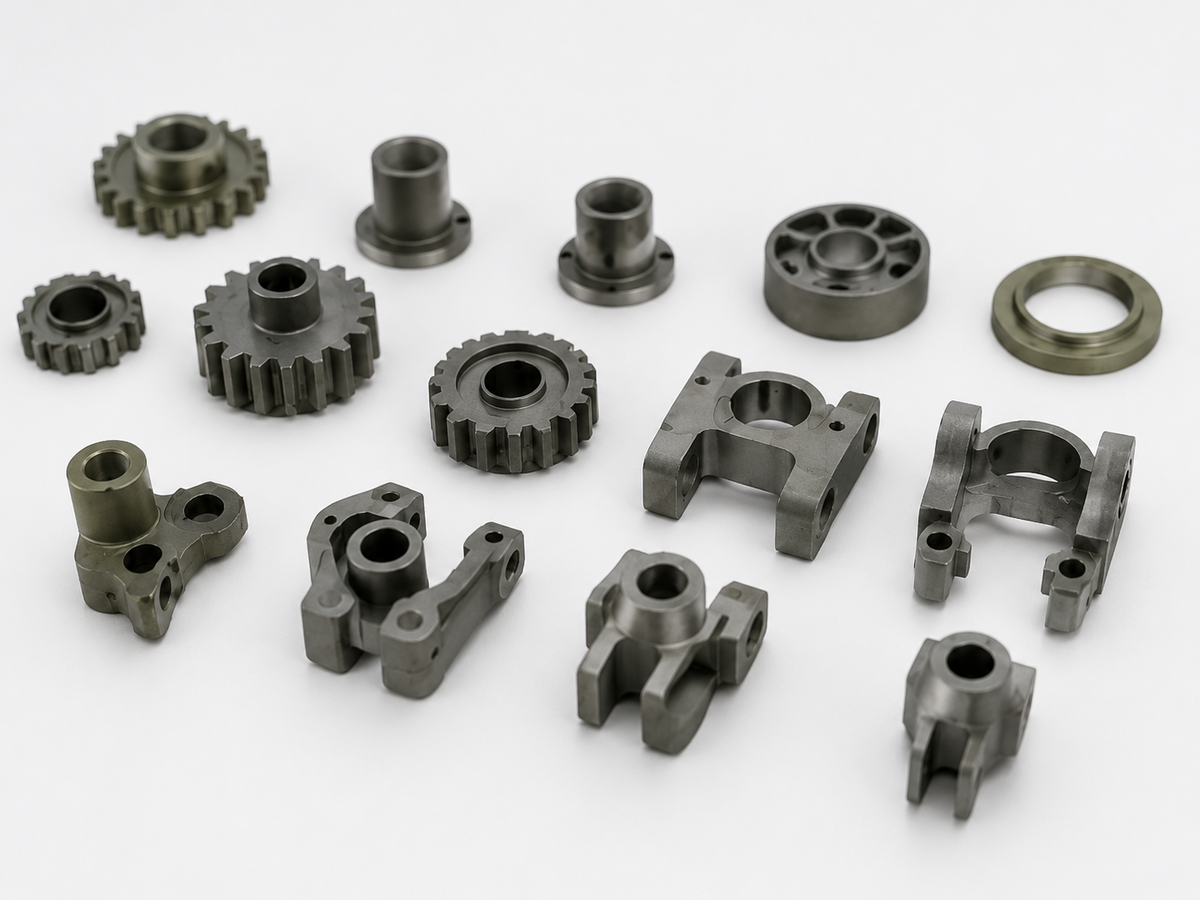
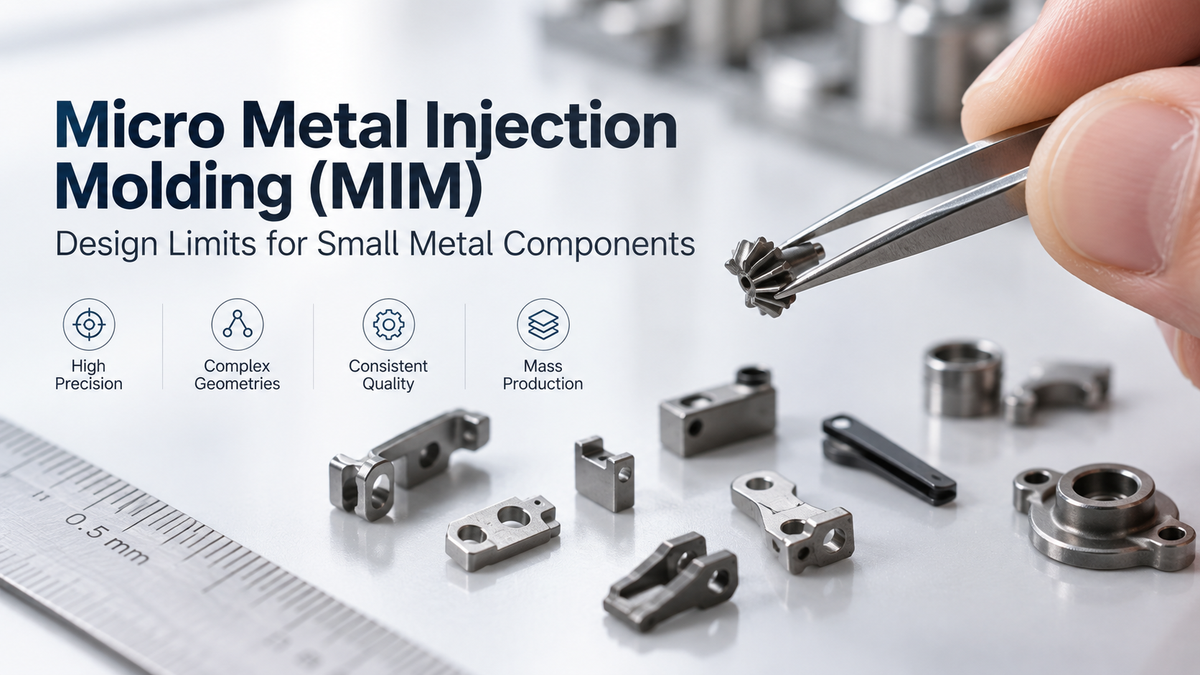
Custom metal injection molding services offer an alternative for producing precision metal parts with intricate features, consistent dimensions, and repeatable quality. For components such as miniature brackets, locking mechanisms, medical instrument parts, and electronic hardware, metal injection molding (MIM) can significantly reduce machining requirements when production volumes justify the initial tooling investment.
However, not every small metal part is suitable for MIM. The material, wall thickness, tolerance requirements, and annual order quantity all influence whether this process is cost-effective.

How Metal Injection Molding Works
Metal injection molding combines fine metal powders with a polymer binder to create a moldable feedstock. The material is injected into a precision mold, producing a component known as a green part.
The green part then undergoes debinding to remove most of the binder, followed by high-temperature sintering. During sintering, metal particles bond together, increasing density and forming the final metal component.
Typical MIM sintering shrinkage is approximately 18–22%, depending on the feedstock and material system. This shrinkage must be considered during mold design to achieve the required final dimensions.
Properly controlled MIM processes can typically achieve 96–99% of theoretical density. Additional CNC machining, heat treatment, polishing, or surface finishing may be performed when specified.
Materials Available for Custom MIM Parts
Material selection directly affects corrosion resistance, hardness, strength, and manufacturing cost.
Common materials used in custom metal injection molding services include:
| Material | Main Properties | Typical Applications |
|---|---|---|
| 316L Stainless Steel | Corrosion resistance, good formability | Medical instrument components, consumer electronics |
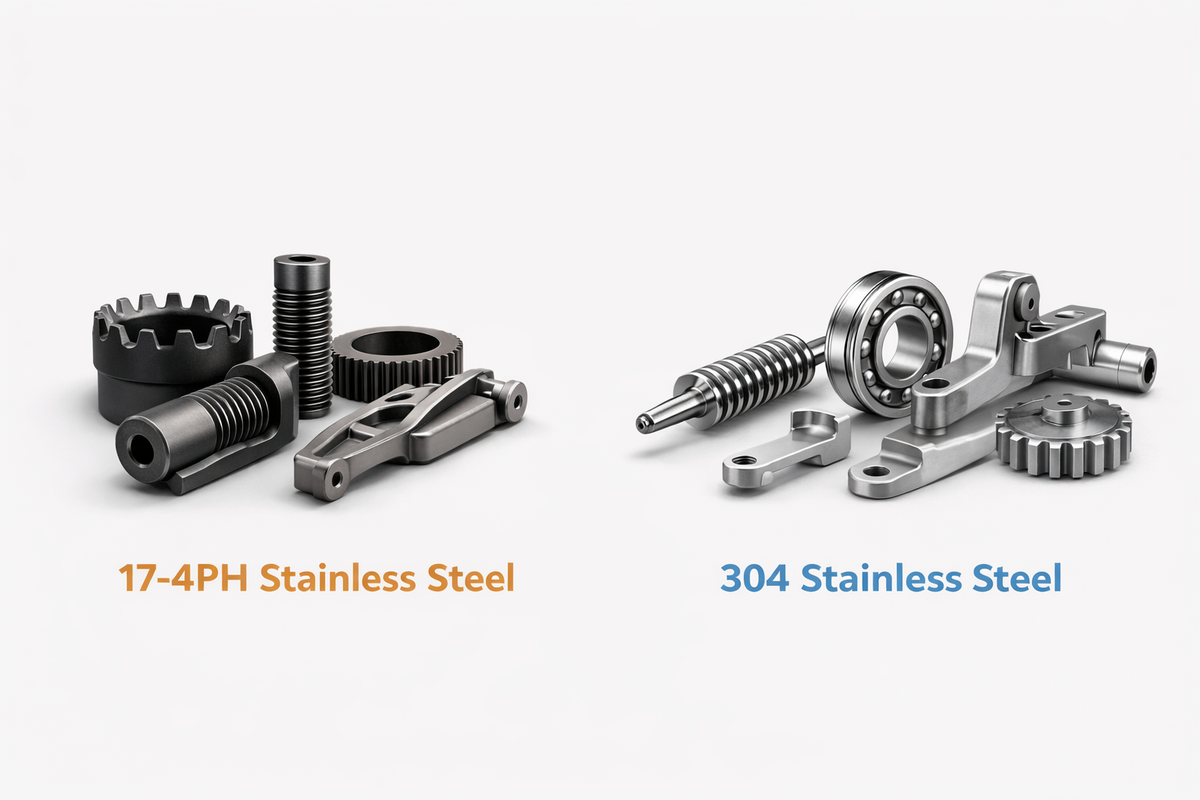
| 17-4PH Stainless Steel | High strength, heat-treatable | Mechanical connectors, locking components |
| 304 Stainless Steel | General corrosion resistance | Housings, brackets, precision fittings |
| 420 Stainless Steel | Heat-treatable, wear resistance | Gears, small mechanical parts |
| 440C Stainless Steel | High hardness and wear resistance | Wear-resistant precision components |
| Low-Alloy Steel | Strength, heat-treatment flexibility | Automotive and industrial mechanisms |
316L and 17-4PH are particularly common choices for stainless steel MIM components. Other alloys can be evaluated depending on powder availability, mechanical requirements, and production quantities.
Dimensional Tolerances and Design Guidelines
A major advantage of precision metal injection molding services is the ability to form multiple complex features within a single molded component.
For many MIM components, a typical as-sintered dimensional tolerance is approximately ±0.3% to ±0.5% of the nominal dimension. The achievable tolerance depends on part geometry, material, feature location, and sintering conditions.
For example, a 20 mm dimension at ±0.3% corresponds mathematically to ±0.06 mm. This is a reference calculation rather than a guaranteed manufacturing capability. Small critical features may have additional absolute tolerance limits.
When designing MIM parts, several factors deserve particular attention.
Wall thickness: Relatively uniform wall sections improve feedstock flow and reduce distortion during debinding and sintering. Large differences between thick and thin sections should be minimized.
Holes and internal features: Cross holes, grooves, splines, and small internal profiles can often be molded directly, although tooling access and core-pin support must be evaluated.
Corners and transitions: Rounded corners and gradual thickness transitions help reduce stress concentrations and improve manufacturability.
Critical dimensions: Precision bores, threaded interfaces, sealing surfaces, or tight geometric tolerances may require secondary CNC machining, reaming, grinding, or sizing.
A DFM review before tooling helps identify these requirements and prevents unnecessary modifications after initial mold trials.

When Is MIM More Cost-Effective Than CNC Machining?
MIM is generally most competitive for small, geometrically complex components produced in medium to high volumes.
Consider a stainless steel component with several cross holes, curved surfaces, and internal features. CNC machining may require multiple setups and substantial cutting time to produce each piece.
With MIM, many of these features can be formed simultaneously in the mold. Once tooling is completed and the manufacturing process is validated, the cost per part can decrease as order quantities increase.
However, MIM requires an upfront tooling investment. For a simple component or an order of only a few pieces, CNC machining may remain the more economical option.
The decision should consider total project cost, including tooling, raw material, molding, sintering, secondary machining, inspection, and annual production volume.
Custom MIM Manufacturing at XY-GLOBAL
XY-GLOBAL supports custom metal injection molding projects for small precision components used in electronics, medical equipment, automotive systems, and industrial applications.
Our manufacturing approach begins with a review of the customer's 2D drawings, 3D models, material specifications, and production requirements.
We evaluate the part geometry, tooling feasibility, expected sintering behavior, and critical tolerances before recommending a manufacturing solution.
For parts requiring additional precision, MIM can be combined with CNC machining, heat treatment, and surface finishing. Dimensional inspection and material verification can also be incorporated according to project requirements.
This approach allows customers to balance component performance, manufacturing cost, and production consistency.
Frequently Asked Questions
What is the typical lead time for custom MIM parts?
Lead time depends on tooling complexity, material availability, mold trials, and secondary operations. Prototype approval is normally required before full production. A project-specific schedule can be established after DFM evaluation.
Can MIM samples be produced before mass production?
Yes. Initial samples can be produced using production tooling for dimensional and functional evaluation. For projects requiring only a few early prototypes, CNC machining may be used first to verify the design before investing in MIM tooling.
What inspection reports can be provided for MIM parts?
Depending on customer requirements, inspection documentation may include dimensional inspection reports, CMM results, material certificates, hardness testing, and other specified quality records.
What information is needed for a MIM quotation?
Providing 2D drawings, 3D CAD files, material requirements, critical tolerances, surface finish specifications, and estimated annual quantities helps the manufacturer evaluate feasibility and prepare an accurate quotation.
Request a Custom Metal Injection Molding Quote
If you are developing small precision metal components and looking for a reliable manufacturing solution, XY-GLOBAL can help evaluate whether metal injection molding is suitable for your project.
Send us your part drawings, material specifications, and estimated order quantities. Our engineering team can review the design and recommend an appropriate combination of MIM, CNC machining, and secondary finishing.


Share:
Precision Ceramic Components: A Practical Guide from Material to Custom Manufacturing